


Betaine (TMG) Powder
- 120 grams of crystalline, anhydrous Betaine (Trimethylglycine/TMG) powder
- One bag of Betaine powder (120 grams) corresponds to a supply for 50 days (One serving = 2400 mg)
-
Sustainable production from sugar beets (Beta vulgaris) in Austria
-
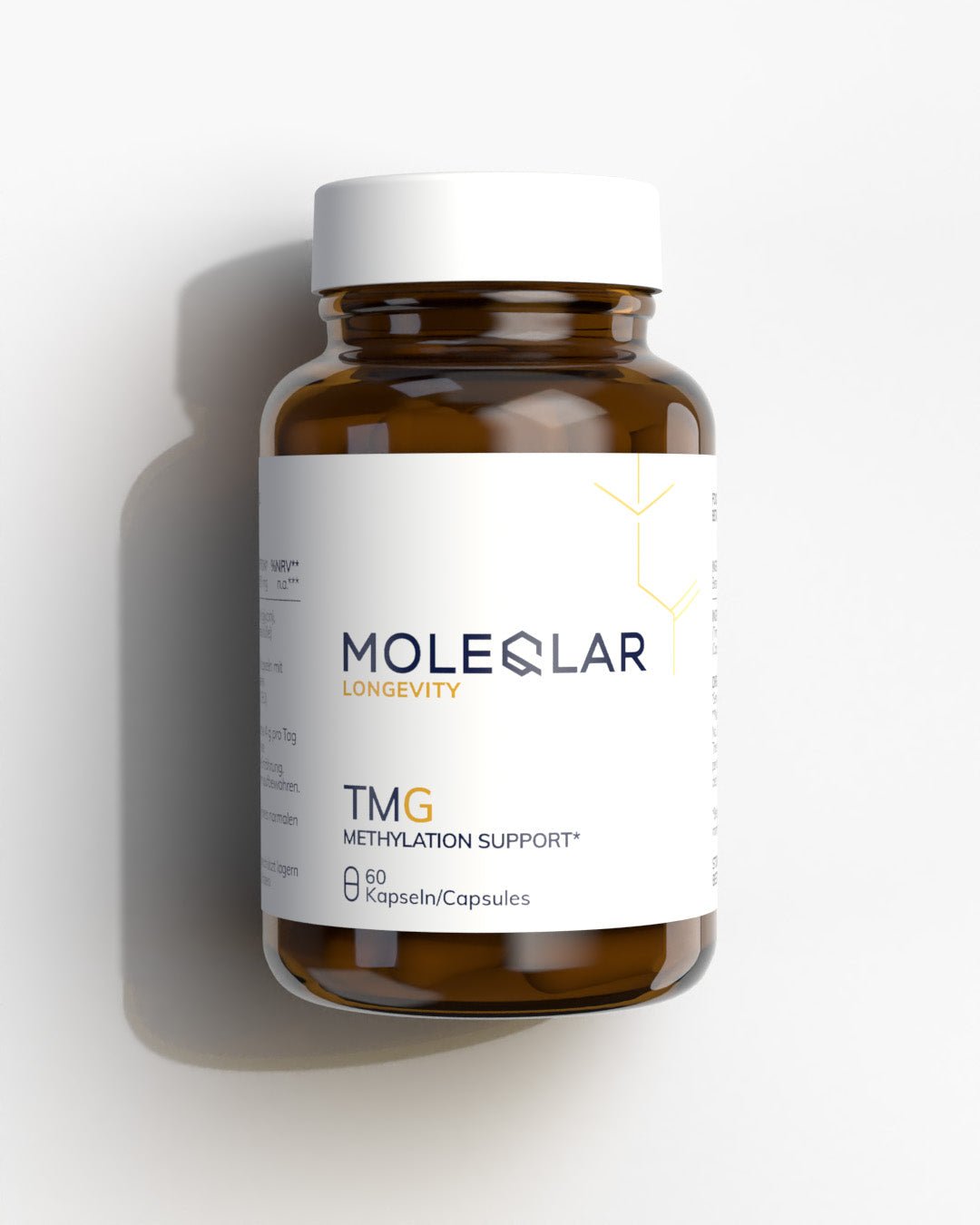 Capsules
-
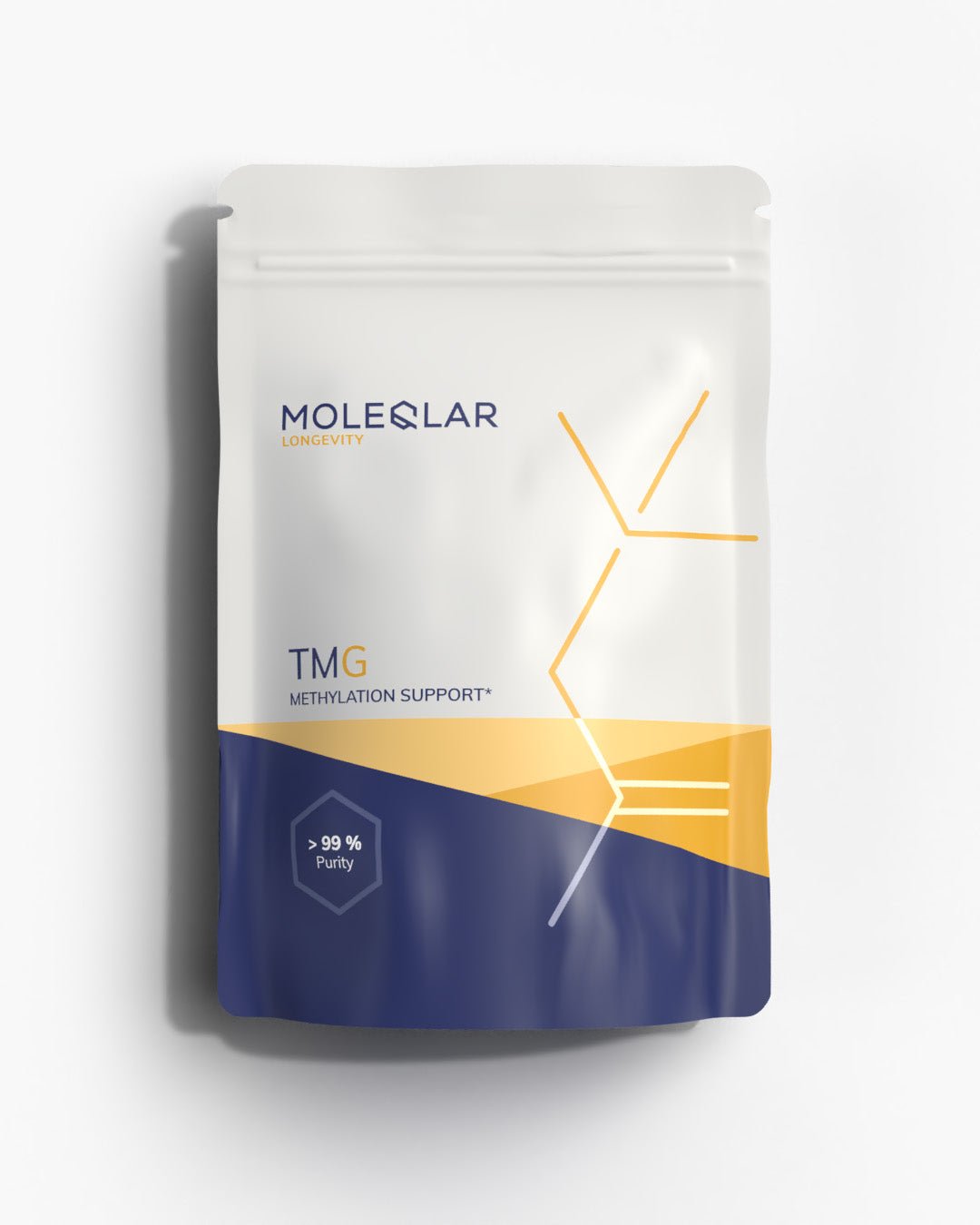 Powder
-
Your supply. Your routine.
€14,90
€42,48 €44,70
€80,46 €89,40
€152,04 €178,80
- Stay consistent: So that your routine doesn't take a break
- Plan wisely: More stock, more price advantage
Your routine. Automatically cheaper.
€13,41€14,90
- Save up to 25 %: 15 % from the 3rd delivery, 20 % from the 6th, and 25 % from the 12th delivery
- You stay flexible: Pause, cancel, or adjust delivery at any time
Your delivery interval:
€14,90
€42,48 €44,70
€80,46 €89,40
€152,04 €178,80

 Quality Promise
The MOLEQLAR "Clean Product & Label" philosophy ensures that every product arrives at you in the best quality. Each individual batch undergoes a comprehensive and product-specific purity and residue analysis (heavy metals, microbiology, pesticides).
Your legal guarantee rights

Shipping
Delivery within 1-4 working days in DE and AT. Orders placed after 12 noon will be processed on the next working day.
For more information, please visit the Shipping Information.
Quality Assurance
At MOLEQLAR, we place the highest value on transparency regarding the quality of our products. Each individual product undergoes strict testing both by our manufacturer and by independent laboratories in Germany.
Click on this link, to access the certificates directly.
Recommended intake

Developed by doctors

Manufacturing with responsibility

Certified in independent laboratories

Free from genetic engineering

Scientifically based

100% Customer-Oriented
Betaine (TMG) Powder at a glance
Betaine (TMG) Powder at a glance
What is Betaine (TMG)?
Function
Application
Ingredients
Outstanding quality standards
Crystalline Trimethylglycine (Betaine) in powder form
Crystalline, anhydrous betaine powder with sustainable production from sugar beets (Beta vulgaris) in Austria.
Betaine Powder by MOLEQLAR

Sugar beets as a natural source of betaine

Quality Assurance
The MOLEQLAR "Clean Product & Label" philosophy ensures that every product arrives at you in the best quality. Each individual batch undergoes a comprehensive and product-specific purity and residue analysis (heavy metals, microbiology, pesticides).
Betaine (TMG) Powder
Betaine powder facts
| Nutrients/Other Substances | Serving* | %NRV** |
|---|---|---|
| Betaine Anhydrous | 2400 mg | *** |
The difference.
Quality, transparency, and scientific responsibility are non-negotiable for us.


Independent laboratory analysis
Purity of Ingredients
Transparency in raw materials
Scientific Background
Improved bioavailability


Frequently asked questions (FAQs)
Wie sollte ich Betain Pulver richtig lagern?
Das Molekül Betain sollte am besten kühl und trocken gelagert werden. Auch aus direktem Sonnenlicht und von Hitze fern halten. Bitte außerhalb der Reichweite von Kindern aufbewahren. Dafür gibt es mehrere Möglichkeiten: Unsere recycelbaren und umweltfreundlichen Standbodenbeutel bieten einerseits einen ausreichenden Schutz vor hohen Temperaturen, Sonneneinstrahlung und Feuchtigkeit. Nach dem Öffnen der Schweißnaht sollte darauf geachtet werden, dass der Beutel stets mittels Druckverschluss versiegelt bleibt. Dadurch wird eine adäquate und sichere Lagerung von Betain ermöglicht.
Andererseits kannst du auch gerne auf unseren QJAR zurückgreifen. Der praktische Tiegel aus Opalglas ist nicht nur nachhaltig und umweltfreundlich, sondern bildet eine nützliche Alternative zu den klassischen Tüten. Fülle einfach das Pulver in die Dose und greife bei Bedarf bequem und einfach auf das Betain zurück. Der Tiegel fasst maximal 100 ml, also ungefähr 60 Gramm Betain-Pulver.
Wie kann ich Betain Pulver richtig abmessen?
Das Molekül Betain wird unter anderem in Pulverform angeboten. Entsprechend stellt sich häufig die Frage nach dem richtigen Abmessen. Folgende Optionen stehen dir zur Verfügung:
- Abmessung per Labor- oder Feinwaage: Wer Betain bis auf den Milligramm genau abmessen möchte, sollte sich bestenfalls eine Feinwaage zulegen. Verschiedene, relativ akkurate Modelle, sind bereits ab 10-15 Euro auf Amazon erhältlich.
- Abmessung mit dem QSCOOP: In deinem Beutel Betain befindet sich zusätzlich ein QSCOOP von MOLEQLAR. Dieser Messlöffel fasst insgesamt 1 ml – also je nach Lagerung und Dichte bedeutet das ungefähr 600 mg Betain-Pulver.
- Abmessung mit handelsüblichem Teelöffel: In einen klassischen glattgestrichenen Teelöffel passen zirka zwischen 3 und 5 ml. Das entspricht einer Menge von bis zu 3 Gramm Betain.
Wie sollte ich Betain Pulver richtig einnehmen?
Bei Betain (TMG) handelt sich um ein wasserlösliches Molekül. Es sollte daher mit viel Flüssigkeit, bestenfalls einem Glas Wasser, eingenommen werden. Ob du das Pulver getrennt oder zusammen mit einer Mahlzeit einnimmst, ist komplett dir überlassen. Aktuell gibt es keine Studien, die eine Methode als überlegen darstellen. Prinzipiell wird Betain (Trimethylglycin) äußerst gut im Darm aufgenommen und hat eine hohe Bioverfügbarkeit.
Wie lange ist mein Einkauf haltbar?
Prinzipiell kann man von einer Haltbarkeit von ungefähr zwei Jahren ausgehen. Diese Angabe dient lediglich als Richtwert, kann demnach variieren und ist ohne Gewähr. Das genaue Mindesthaltbarkeitsdatum deines Einkaufs findest du auf der Rückseite deines Betain-Beutels notiert.


